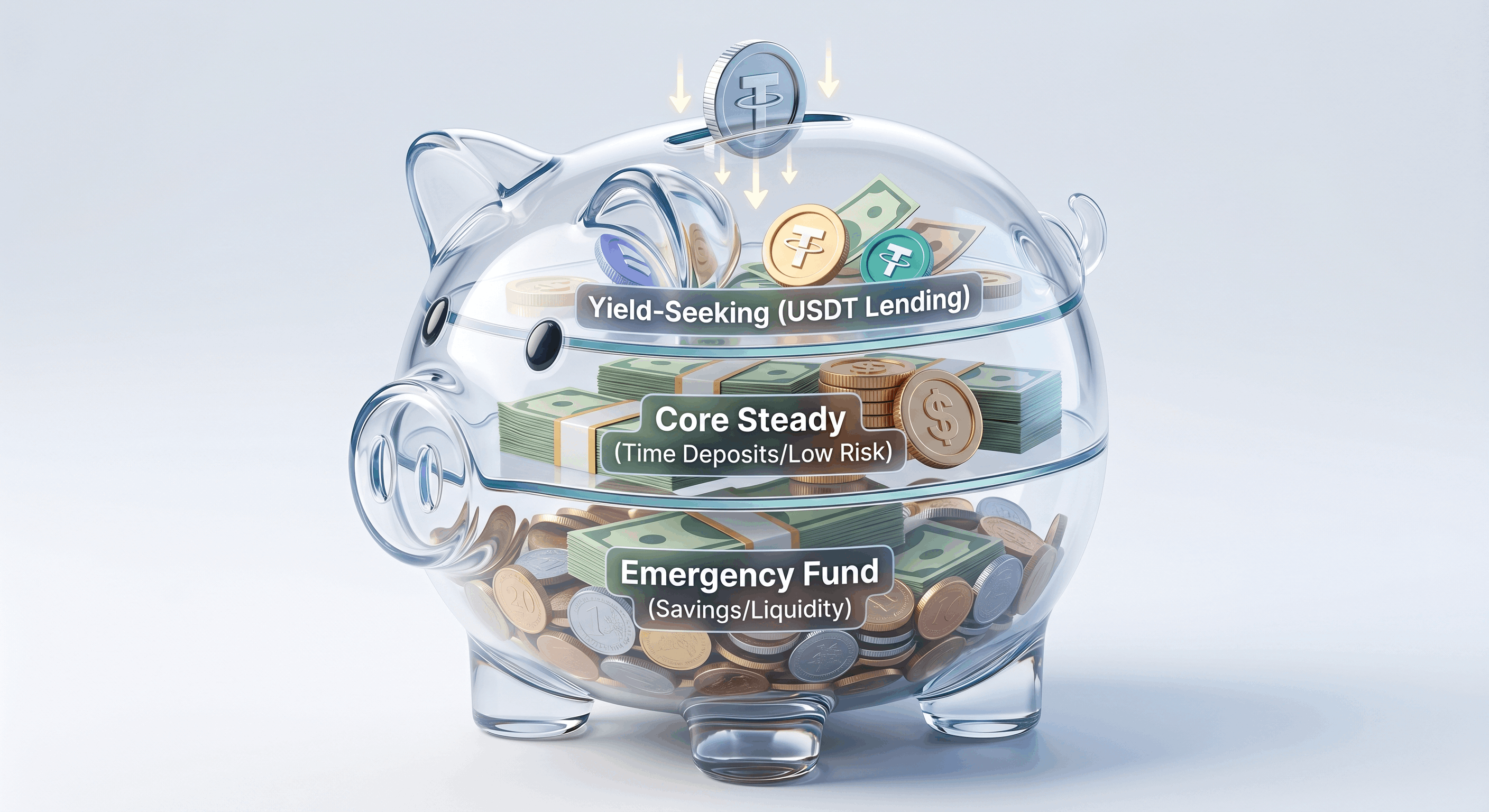
The bottom line: when idle cash lands, don't rush to go all in on anything. The sensible move is to layer it — keep an emergency fund, put a portion in steady holdings, and allocate a small slice to try "USD stablecoin lending." Lending's appeal is a rate usually above a cash deposit, with returns denominated in USD; but the rate is variable and it carries stablecoin and exchange risk, so it's "part of your idle cash," not "your whole net worth." Here's an allocation framework.
Why does a 1.5% deposit feel unsatisfying?
Cash deposit rates have long sat around 1.5%, and after inflation the real return is near zero or negative. Park a bonus in a deposit for a year and its purchasing power barely moves. So many people look for an option that's "risk-controlled but pays a bit more than a deposit" — crypto lending is one path worth understanding, provided you're clear on its risk boundary.
A layered allocation framework for idle cash
| Layer | Purpose | Where to put it |
|---|---|---|
| Emergency fund | 3-6 months of expenses, instantly accessible | Savings / high liquidity |
| Steady core | The bulk you don't want exposed to high volatility | Deposit / low-risk holdings |
| Yield sleeve (optional) | A small slice you'll risk for higher return | USD stablecoin lending, etc. |
"USD stablecoin lending" goes in the last layer — it's the "yield sleeve," not the "core." How much you allocate depends on your risk tolerance, not on how tempting the return number looks.
Where does the return come from?
You convert funds into a stablecoin pegged 1:1 to the dollar (USDT) and lend it on an exchange like Bitfinex to traders who need financing, earning interest. The rate is set by market supply and demand and floats constantly — higher when markets are hot, lower when quiet, with no fixed guarantee. To get a rough feel for returns across different principal and rates, use the yield calculator (remember it's illustrative, not a promise). For a fuller allocation strategy, see the $100k lending strategy.
Honest take: the risk boundary of this money
- Variable, not guaranteed: don't treat the lending rate like a deposit rate — it changes.
- Stablecoin depeg risk: stablecoins are meant to hold a 1:1 peg, but not absolutely.
- Exchange counterparty risk: assets sit on the exchange, so you must trust it.
- FX factor: if you eventually convert back to your home currency, USD/local FX swings affect the real result.
Factor these in and you'll naturally "allocate only part of your idle cash" rather than going all in — which is exactly the point of layered allocation.
How to start without watching the screen all day?
Lending well means catching the fill during high-rate windows, but you won't want to stay up watching the market for a yield sleeve. Automated lending services (EarnUSD, Cryptolend, Altinvest, Coinlend) check the market every minute and post for you. EarnUSD is non-custodial — it runs through a lend-only, no-withdrawal API, so principal stays in your own exchange account. To choose USDT vs. USD, see USD or USDT lending.
Conclusion
Rather than parking a whole bonus in a 1.5% deposit to be slowly eaten by inflation, layer it first: emergency fund, steady core, then a small slice to try yield. USD stablecoin lending fits the yield layer — it usually pays more than a deposit and is USD-denominated, but the rate is variable and it carries stablecoin and exchange risk. Control the slice size and it becomes a rational yield option, not a gamble. To plan this yield sleeve's interest into a monthly withdrawable cash flow, see the drawdown strategy for lending interest.