First, let me give a super simple conclusion:
USD = Cash in US Dollars
USDT = "Blockchain Dollar Coupons" or "Dollar Stored Points" issued by a company
Both aim to be "as close to 1 US Dollar as possible," but the backing and risks are completely different.
1.Let's clarify with a life analogy: USDT vs USD
Imagine you have two things:
-
USD Cash
-
It's like the cash bills you have in hand or the US dollars in your bank account.
-
Backed by the US government and central bank, it is legal tender.
-
-
USDT
-
It's like a "Dollar Coupon / Dollar Stored Points" issued by a company:
It states "This point ≈ 1 US Dollar". -
This coupon is not issued by the government; it is issued by a private company called Tether and recorded on the blockchain.
-
You trust it is worth 1 US Dollar because:
-
The company claims, "I have equivalent assets as reserves in the real world,"
-
and the market generally agrees to exchange it for nearly 1 US Dollar.
-
-
Another analogy:
-
USD = Cash
-
USDT = Points valued in US Dollars stored in "some company's point system"; it's just that these points are on the blockchain, not in a convenience store.
2.What is USDT? In one sentence:
USDT is a type of "stablecoin": the goal is for 1 USDT ≈ 1 US Dollar cryptocurrency.
The purpose of stablecoins is to provide a more stable "cash substitute" in the cryptocurrency world, facilitating transactions, cross-border transfers, and parking funds without constantly following the volatile ups and downs of Bitcoin.
USDT is currently one of the largest stablecoins in the world, with a market cap exceeding 100 billion US Dollars, making it very crucial in the crypto market.
3.Differences between USDT and USD
Let's take a look at a table:
| Item | USD (US Dollar) | USDT |
|---|---|---|
| Issuer | US Government, Federal Reserve | Private Company Tether Limited |
| Form | Cash, coins, bank account balance | Tokens on the blockchain (e.g., ERC-20, TRC-20) |
| Legal Tender? | ✅ US Legal Tender | ❌ Not legal tender in any country |
| Backing | US Government Credit | Assets held by the company (US Treasury bonds, cash, etc.) |
| Usage Scope | Worldwide exchange, physical consumption | Mainly for cryptocurrency trading, some online payments, and cross-border remittances |
| Risks | Inflation, exchange rate fluctuations | In addition to inflation and exchange rates, there are also factors like "company solvency," "decoupling," and "exchange hacks" |
Key differences can be understood as follows:
USD = government-backed money
USDT = company-backed "dollar points," currently accepted by the market but not guaranteed by the government.
4.What is USDT typically used for?
1. The "cash parking lot" for cryptocurrency trading
Many people will:
-
Deposit USD or local currency → first convert to USDT
-
Decide which coin to buy, then use USDT to purchase BTC, ETH, or other coins
-
If they don't want to bear the price volatility, they will sell back to USDT temporarily
It's like entering an amusement park, first exchanging cash for tokens, and then using the tokens to play various games.
2. International transfers and remittances
For example:
-
A is in the United States, B is in Taiwan
-
A transfers USDT to B, it arrives in a few minutes, with fees lower than traditional wire transfers
-
After receiving USDT, B can sell it for New Taiwan Dollars on an exchange
This is particularly common in countries with unstable currencies or complicated international remittance processes.
3. Online payments and DeFi
-
Some foreign services (VPNs, cloud services, freelancer payments) accept USDT
-
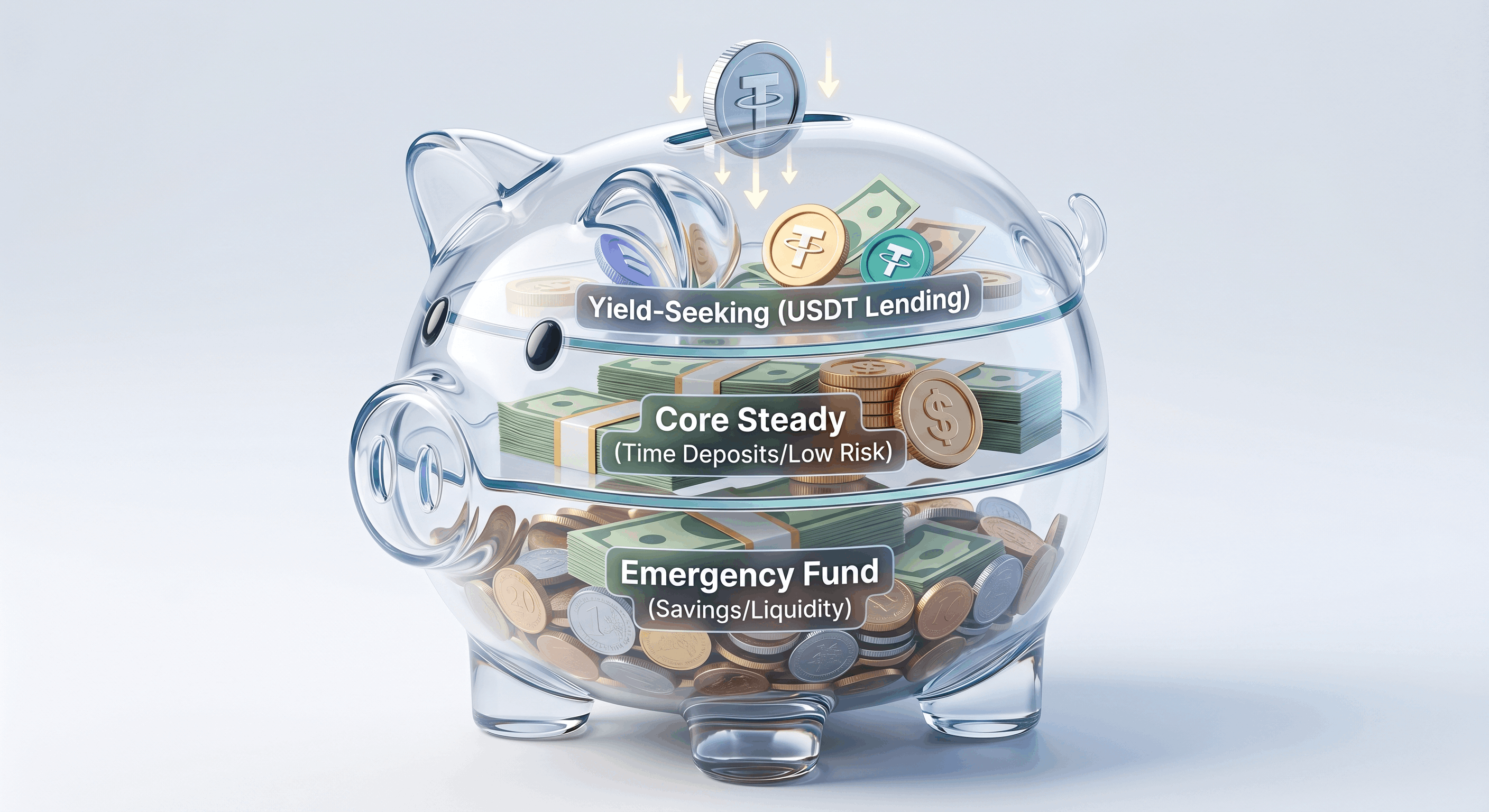
Deposit USDT on DeFi platforms to earn interest or engage in lending (but with higher risks)
5.In Taiwan: Clarifying Laws and the Environment
-
Currently, Taiwan's laws do not classify virtual currencies (including USDT) as "legal tender" or "general currency"; they are closer to "assets" or "property rights".
-
The Executive Yuan designated the Financial Supervisory Commission (FSC) to oversee virtual asset platforms starting in 2023, issuing VASP Guidelines that stipulate:
-
Businesses that deal with New Taiwan Dollars ↔ virtual assets, provide custody, or facilitate trading are considered "Virtual Asset Service Providers (VASP)";
-
They must complete anti-money laundering declarations and cannot mislead Taiwanese people into transferring money;
-
They are moving towards a requirement to "register first and join TVASPA (Taiwan Virtual Asset Service Providers Association) to operate".
-
In simple terms:
In Taiwan, you can legally hold and trade USDT,
but it is not considered "currency"; rather, it is an "investment or asset product",
and the regulatory authorities are becoming stricter to prevent fraud and protect investors.
Additionally, data from trade organizations show that Taiwanese retail investors actually love using stablecoins (especially USDT) along with BTC/ETH.
6.How to Buy USDT in Taiwan?
First, a word of advice: only use exchanges that comply with anti-money laundering regulations and are regulated by the FSC, and avoid strange apps recommended by friends.
The steps are generally as follows:
-
Select a compliant exchange
-
Check if it is a Taiwanese company, has completed AML declarations, and whether it is listed on the TVASPA approved list.
-
There are several common local exchanges in the market that offer TWD↔USDT, such as BitoPro, MaiCoin, MAX, etc., and emphasize mechanisms like AML, bank trust, or insurance.
-
You should check the latest status on the official website / Financial Supervisory Commission website.
-
-
Account Opening + KYC
-
Register on the exchange website / App, upload your ID, and a selfie to complete identity verification (KYC).
-
-
Deposit in TWD
-
Usually through bank transfer, online banking transfer, or some convenience stores that accept payments.
-
-
Place Orders in the TWD/USDT Market
-
Select "Buy USDT with TWD", enter the amount, and press buy.
-
After the transaction, your account will show the USDT balance.
-
-
(Optional) Transfer to Your Own Wallet
-
If you don't want to keep your coins on the exchange, you can:
-
Create your own wallet (software or hardware),
-
Withdraw USDT from the exchange to your wallet address.
-
-
This can reduce the risk of "exchange collapse", but you need to securely manage your private keys; if you send to the wrong address, there's no recovery.
-
-
Sell Back to TWD
-
If you need money later:
-
Sell USDT for TWD on the same exchange,
-
Withdraw TWD back to your own bank account.
-
-
⚠️ Reminder: Transactions and withdrawals will incur fees, so be sure to check carefully and test with a small amount first.
7. How to Actually Use USDT in Taiwan?
Currently in Taiwan, most people use it like this:
-
Investment Purposes
-
You buy USDT with TWD → then use USDT to buy BTC, ETH, or other coins.
-
Or stay in USDT, waiting for the next trading opportunity.
-
-
Cross-Border Expenditures / Income
-
Help foreign clients with projects, they pay you in USDT; you then sell it back to TWD.
-
Or family and friends abroad send you USDT.
-
-
Limited Online Payments
-
Some foreign services accept USDT, and you can pay directly from your wallet.
-
Currently, physical stores in Taiwan almost do not support USDT; you cannot go to 7-11 and say, "I want to pay with USDT" using your mobile wallet.
-
-
Tax Reminder (Very Important)
-
If you profit from trading USDT, it may involve income tax issues in Taiwan; you need to consider the specific situation and amount, and it's advisable to consult an accountant or the National Taxation Bureau.
-
8. Benefits of USDT (Why Do People Love It?)
List simply from your familiar perspective:
-
Transfers are super fast, and fees are usually cheaper than wire transfers
-
Compared to traditional international wire transfers that take 2–3 days and cost hundreds to thousands of TWD,
-
USDT arrives in just a few minutes to over ten minutes on most chains, with very low fees.
-
-
A "safe haven" in the crypto world
-
If you don't want to take the risk of a significant drop like BTC and don't want to withdraw your money back to the bank,
-
you might temporarily hold it in USDT, which has relatively small fluctuations.
-
-
Open 24/7
-
Not restricted by bank operating hours, you can transfer and trade even at midnight.
-
-
For some countries, it's a "substitute for the dollar"
-
In countries where currencies are very unstable and capital controls are strict, people might simply hold USDT as a small "offshore dollar account."
-
9. Risks of USDT (How does it differ from USD?)
This is crucial, and I will use a metaphor of an architect to explain:
USD is like a "national highway" built by the government; no matter how old it gets, it is unlikely to disappear entirely.
USDT is like a "toll expressway" built by private developers;
if the developer runs into problems, has financial holes, or the government plans to demolish it, you have to find your own way.
1. Risks of the issuing company (credit/reserves)
-
Tether claims that all USDT has a 100% reserve, primarily in U.S. Treasury bonds, cash, etc.
-
However, over the years, the market has consistently questioned its reserve transparency, and central banks and the BIS have repeatedly pointed out that stablecoins may lack sufficient transparency, which could pose market risks if there are large redemptions.
In simple terms:
What you hold is not "the U.S. government owes you 1 dollar,"
but rather "Tether claims it owes you 1 dollar."
2. Depegging risk
-
Stablecoins should theoretically always be ≈ 1 dollar, but under market pressure, they could drop to 0.9, 0.8, or even worse.
-
The most extreme example is the collapse of TerraUSD (another stablecoin) in 2022, which plummeted from 1 dollar to mere cents, evaporating tens to hundreds of billions in the entire ecosystem.
-
Although USDT is not the same type of algorithmic stablecoin, this event reminds us: "Stablecoins" are not absolutely stable; they are merely "target stable."
3. Exchange/platform risk
-
If you keep USDT on an exchange, it actually means:
-
The exchange owes you USDT,
-
and Tether owes the exchange equivalent assets.
-
-
If the exchange gets hacked, goes bankrupt, or stops withdrawals, you might not get a single cent back.
-
This has happened many times globally, and Taiwan's Financial Supervisory Commission is currently strengthening its requirements for VASPs.
4. Regulatory Change Risks
-
Global regulation on stablecoins is tightening, with the BIS, EU, and the United States all drafting new rules.
-
Taiwan is also promoting the "Virtual Asset Service Act" (similar), which may require higher capital, custody rules, advertising restrictions, and more in the future.
Once the rules change, certain platforms may be forced to stop specific services or close their doors to Taiwanese users.
5. Operational & Fraud Risks (Particularly Important for Taiwan)
-
Wrong address, wrong chain → Usually irreversible.
-
Taiwan has been filled with "fake investment advisors, fake teachers, fake friends" asking you to buy USDT and send it to them; the Financial Supervisory Commission has already listed "virtual asset fraud" as a key target for crackdown.
Whenever someone tells you:
-
"Guaranteed high interest, capital protection, just transfer USDT to me"
-
"This is not an investment, it's insider info, guaranteed profit"
Treat it as fraud, do not transfer.
10. If You Just Want to "Understand" Instead of Investing Immediately
If you want to understand USDT, I would suggest you treat it as a "new type of asset" and organize it like this:
-
Usage Perspective
-
If you are just an ordinary person, not involved with cryptocurrencies, and do not need cross-border payments:
→ You can actually just use TWD + USD cash / foreign currency accounts. -
If you have:
-
Overseas freelance income
-
Regularly buy and sell cryptocurrencies
-
Friends/family abroad to transfer money to each other
→ USDT will become a tool you frequently encounter.
-
-
-
Risk Tolerance
-
Only those who can accept "three types of risks: company, platform, and regulation" are suitable to put more money into stablecoins.
-
If you are cautious, just treat it as "understanding a new tool"; there is no need to actually buy.
-
-
A Final Note (Not Investment Advice)
USDT is a blockchain point system associated with the "US dollar";
the benefits are speed, convenience, and high compatibility with the crypto world;
the downside is the added risks from the issuing company, platform, and regulation,
and it should never be thought of as "equally safe as the US dollar."