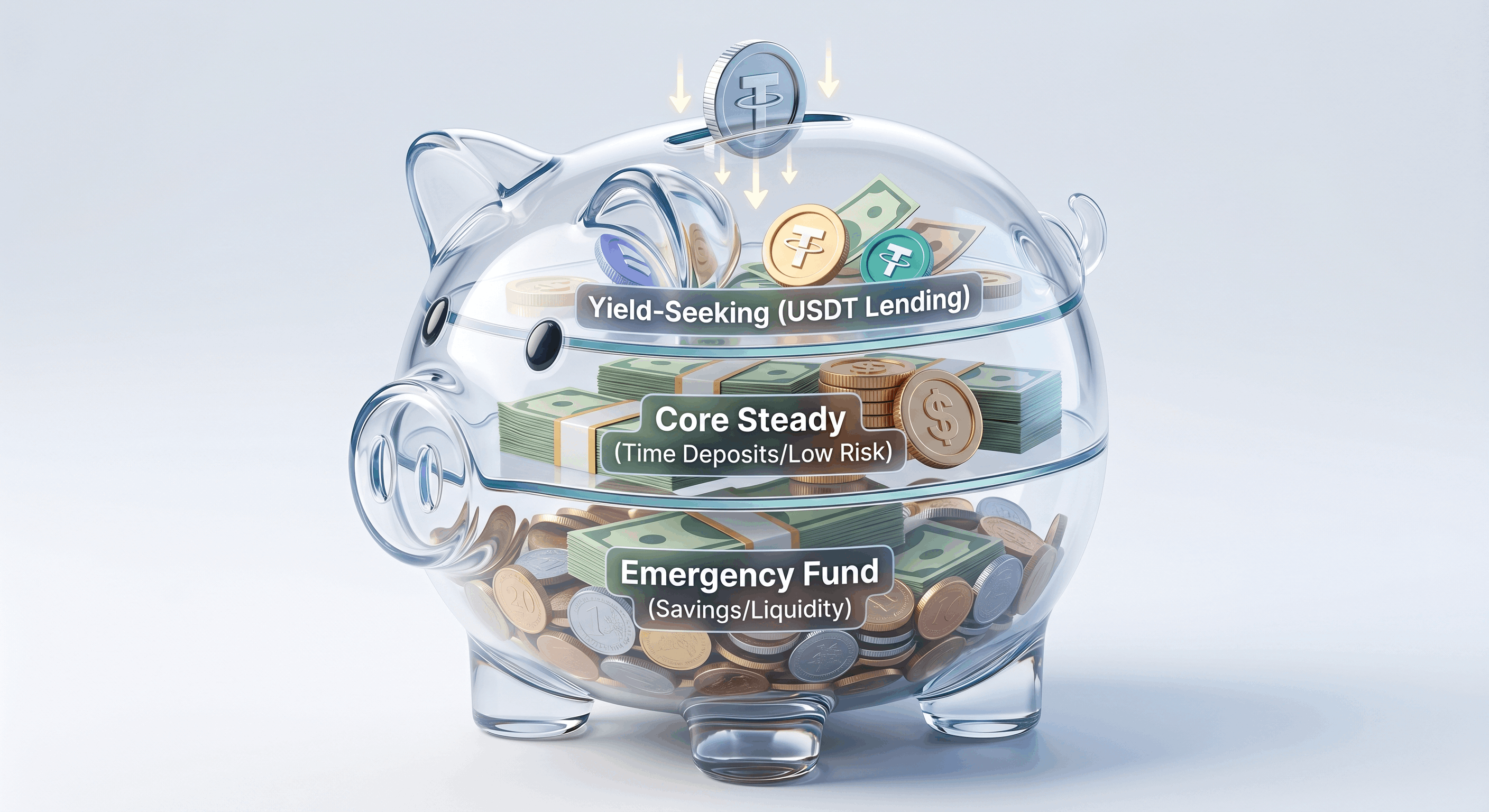
Three terms, one line each: APR is the nominal annual simple rate, APY is the real annual rate with compounding, and ROI is what you actually earned. The rate Bitfinex shows you for lending is the APR (daily rate × 365, no compounding); if you re-lend your matured interest, compounding turns the real annual figure into the APY (always ≥ APR); and the percentage you actually pocket by year-end is the ROI — decided together by fees, idle time, and how often you re-lend, and usually lower than the APR you posted.
This 3-minute guide explains the difference between the three, why a lender's real ROI is often below the posted APR, and how to lift all three numbers.
APR: the nominal annual simple rate (what Bitfinex shows you)
APR (Annual Percentage Rate) annualizes a per-period rate without compounding. A Bitfinex lending rate is essentially a daily rate, so APR = daily rate × 365. For example, at a 0.04% daily rate, APR = 0.04% × 365 ≈ 14.6%. This is the number you see in the order book and when posting an offer, but it assumes "lent out all year and interest never reinvested" — two assumptions that almost never hold in reality.
APY: the real annual rate with compounding
APY (Annual Percentage Yield) factors in the compounding from reinvesting your interest. When a loan matures, principal plus interest returns to your wallet, you lend it out again, and the next period earns interest on a larger principal — that's compounding. At a 0.04% daily rate with daily reinvestment: APY = (1 + 0.0004)^365 − 1 ≈ 15.7%, about a percentage point above the 14.6% APR. The higher the rate, the wider the APR–APY gap: a 0.1% daily rate (36.5% APR) compounds to nearly 44% APY.
ROI: what you actually earned (the outcome)
ROI (Return on Investment) = the amount actually earned over a period ÷ the principal invested. It's an outcome, not an annualized rate, and can cover any time span. The difference from APR/APY: ROI reflects "what actually happened" — including idle time when funds weren't lent, the funding fee Bitfinex takes on interest (about 15%), and whether you reinvested. So a posted APR of 14.6% does not mean a year-end ROI of 14.6%.
All three at a glance
| APR | APY | ROI | |
|---|---|---|---|
| Meaning | Nominal annual simple rate | Annual rate with compounding | Actual return |
| Compounding? | No | Yes | Whatever happened |
| Time span | Annualized | Annualized | Any period |
| Includes fees/idle? | No (theoretical) | No (theoretical) | Yes (real) |
| Lending use | The rate you post | Potential after compounding | What you actually pocket |
A mnemonic: APR is the "sticker rate," APY is the "potential after compounding," and ROI is the "truth at checkout."
Why is a lender's real ROI often below the posted APR?
Three things eat into returns:
- Idle time: your funds aren't lent every second. Offering too high doesn't fill, and a gap after maturity with no immediate re-post both mean stretches earning 0 interest. (For why funds sit idle, see the matching-mechanism article.)
- Funding fee: Bitfinex takes about 15% of the interest you earn (on interest only, never principal). A 14.6% APR nets roughly 12.4% after the fee.
- No reinvestment: interest sitting in your wallet un-lent means you only get the APR, never the compounding boost of the APY.
Lending bots (EarnUSD, Cryptolend, Altinvest, Coinlend, etc.) close these three gaps: auto re-posting to shrink idle time, and auto-reinvesting at maturity to turn APR into APY. Idle time is the part most sensitive to reaction speed — EarnUSD, besides auto-relending at maturity, adds 1-minute high-rate detection plus out-of-cycle grabbing, squeezing both "offered too high, never fills" and "gap after maturity" idle stretches to a minimum, so your real ROI hugs the theoretical APY as closely as possible.
Bottom line
APR is the nominal rate you post, APY is the annualized potential after compounding, and ROI is what you actually pocket after fees and idle time. Confuse the three and you'll think "14.6% posted means 14.6% by year-end." What really lifts ROI is shrinking idle time + auto-reinvesting + grabbing high rates — which is exactly the core value of a lending bot.