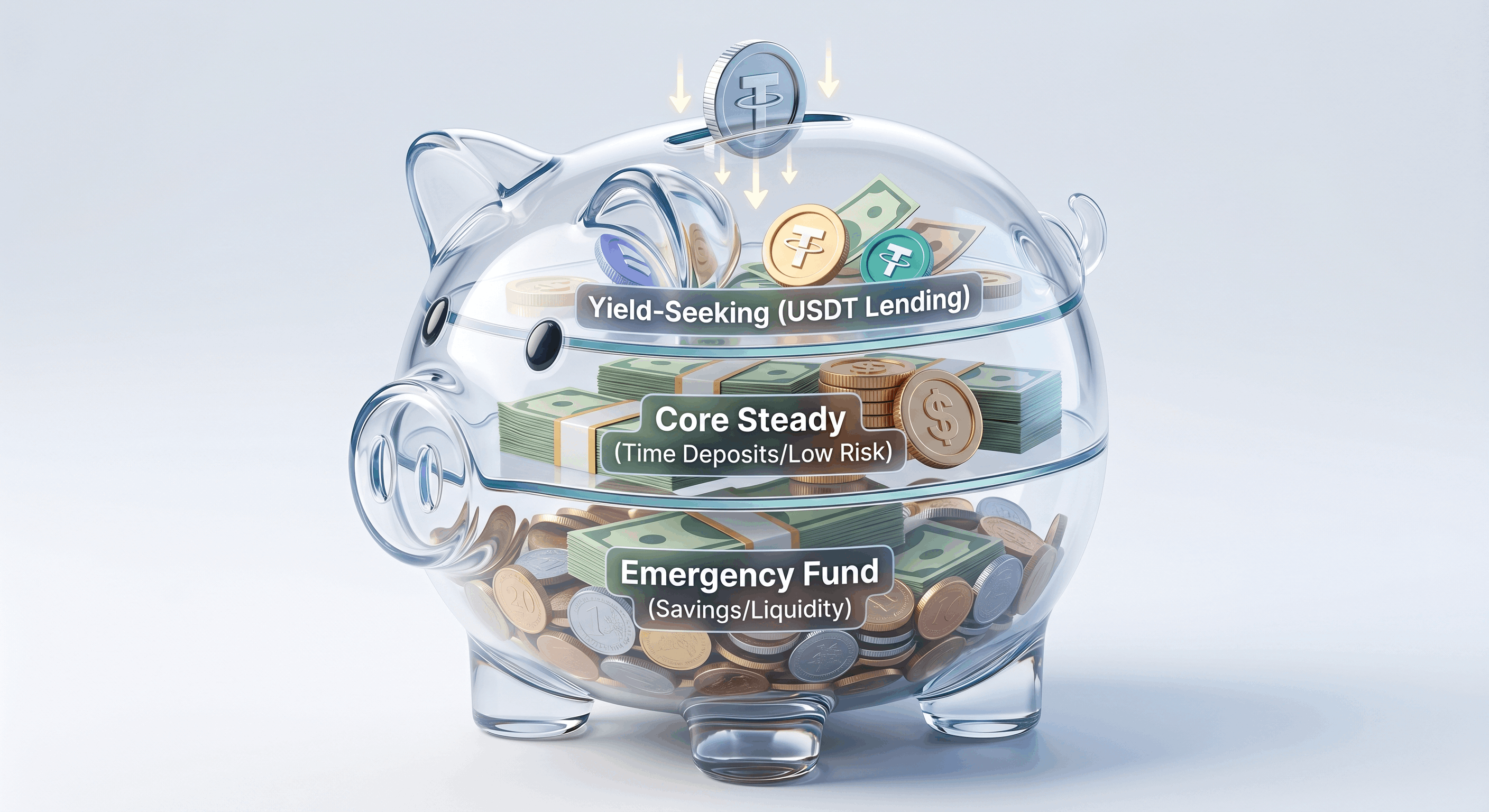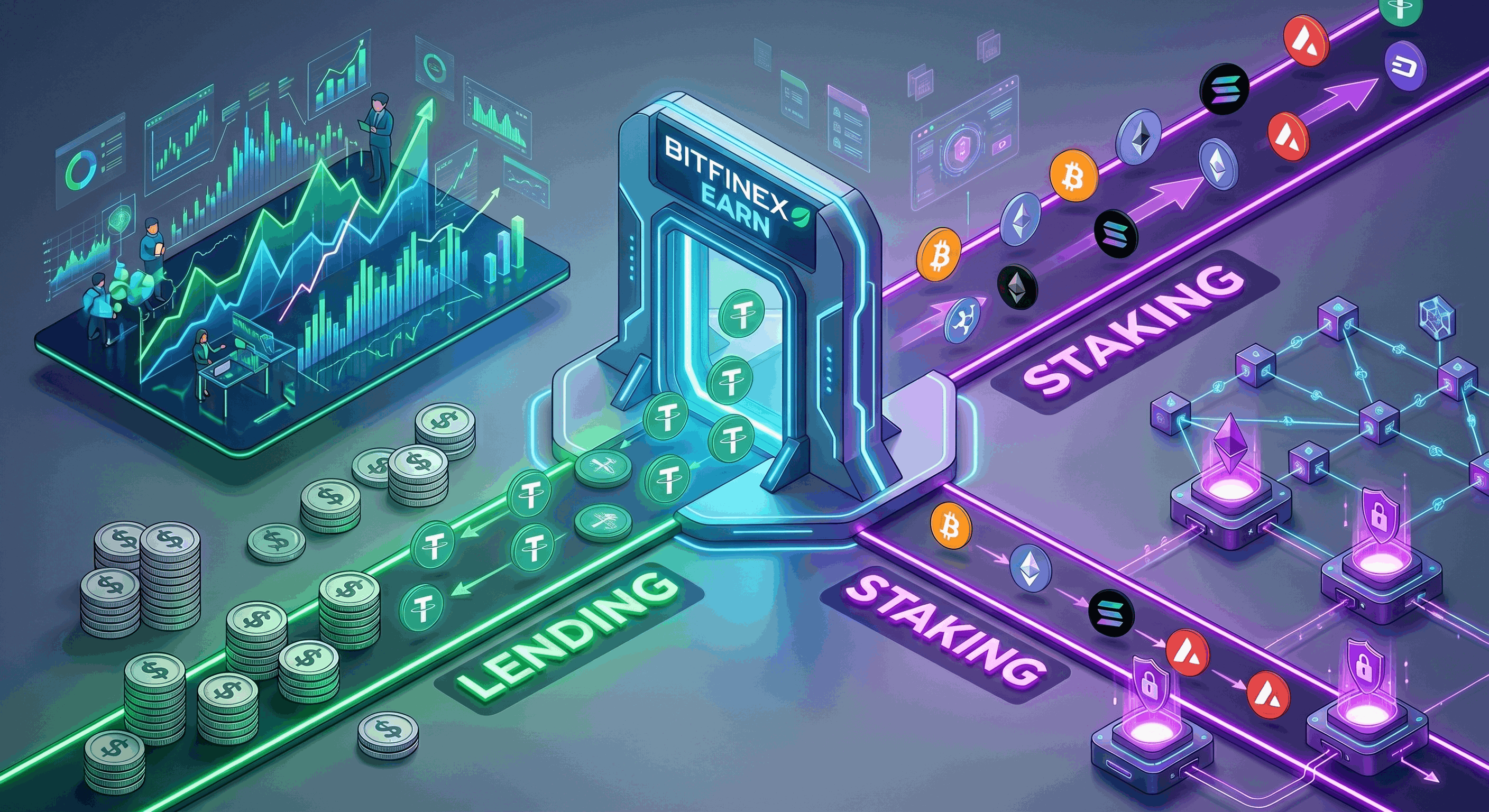
Bottom line first: there are two main ways to earn passive yield on Bitfinex — funding (lending) and staking — and they work completely differently. Funding means lending your USD/USDT/BTC to leveraged traders for floating interest; staking means locking specific coins to collect a blockchain's protocol rewards. Many people lump "earning on Bitfinex" together and end up confusing the risk, the asset, and the source of yield. Here's the clean version.
Why the confusion?
Because both get called "Earn," but underneath they're two different things. Getting it wrong costs you: you think you're doing A, but your actual risk and liquidity are B. Let's split them apart.
What is funding (lending)?
Bitfinex has a P2P funding market: you post capital to lend to people who want to trade on leverage, and they pay you interest. The rate is set in real time by supply and demand (floating) — high when demand is strong, low when it's quiet. Key points:
- Assets: USD, USDT, BTC, etc. (stablecoins and majors).
- Yield source: interest paid by borrowers (floats with the market; see FRR).
- Liquidity: depends on the term you post, 2 to 120 days, returning to your account at maturity.
- How it works: it's P2P matching at its core; see how lending gets matched.
This is exactly the part EarnUSD automates — posting offers 24/7, grabbing high rates, reinvesting at maturity.
What is staking?
Staking means locking up specific proof-of-stake (PoS) coins to participate in that blockchain's operation and collect rewards the protocol issues. It differs from funding in:
- Assets: only specific PoS coins (not the stablecoin-lending world).
- Yield source: the blockchain protocol's staking rewards (driven by that chain's inflation/reward design), not borrower interest.
- Liquidity: often a lock-up / unbonding period — not always instantly withdrawable.
- Price risk: you earn that coin, so its price swings directly affect your principal's value.
Funding vs staking: one table
| Dimension | Funding (lending) | Staking |
|---|---|---|
| Main assets | USD / USDT / BTC | Specific PoS coins |
| Yield source | Floating interest from borrowers | Blockchain protocol rewards |
| Rate setting | Supply & demand (floats live) | Protocol rules (relatively fixed) |
| Liquidity | By term, returns at maturity | Often a lock-up period |
| Principal price risk | Near-none for stablecoin lending | Yes (you hold a volatile coin) |
| Best for | Earning interest on stablecoins with flexibility | Long-term PoS-coin believers willing to lock up |
Which fits you?
If you hold stablecoins (USD/USDT) you want to earn interest on, without taking big price swings, funding is usually more intuitive: principal is a stablecoin, yield is interest, it returns at maturity. If you're a long-term believer in a PoS coin you'd hold anyway, staking lets those coins earn a bit extra while you hold. The two aren't mutually exclusive — many people do both.
The difference is "do you need to watch the screen, do it by hand?" Funding rates float live and high-rate spikes are fleeting — hard to capture manually, which is exactly why lending bots exist. EarnUSD monitors every minute, auto-grabs high rates, auto-reinvests, all non-custodial (a lend-only, no-withdrawal API; your principal stays in your own Bitfinex account).
Conclusion
"Earning on Bitfinex" isn't one thing — it's two paths: funding earns borrower interest (mostly stablecoins, flexible), staking earns blockchain protocol rewards (PoS coins only, often locked). Figure out which asset you want to use and what risk you can take, then pick. If you want the funding path without watching the screen, see how EarnUSD automates it.